"Should I straighten my teeth or just get veneers?" It may be the most common question in cosmetic dentistry — and the framing hides a misunderstanding. Invisalign® and porcelain veneers are not two versions of the same treatment. They do fundamentally different things, and choosing well starts with understanding that difference.
The core difference, in one sentence
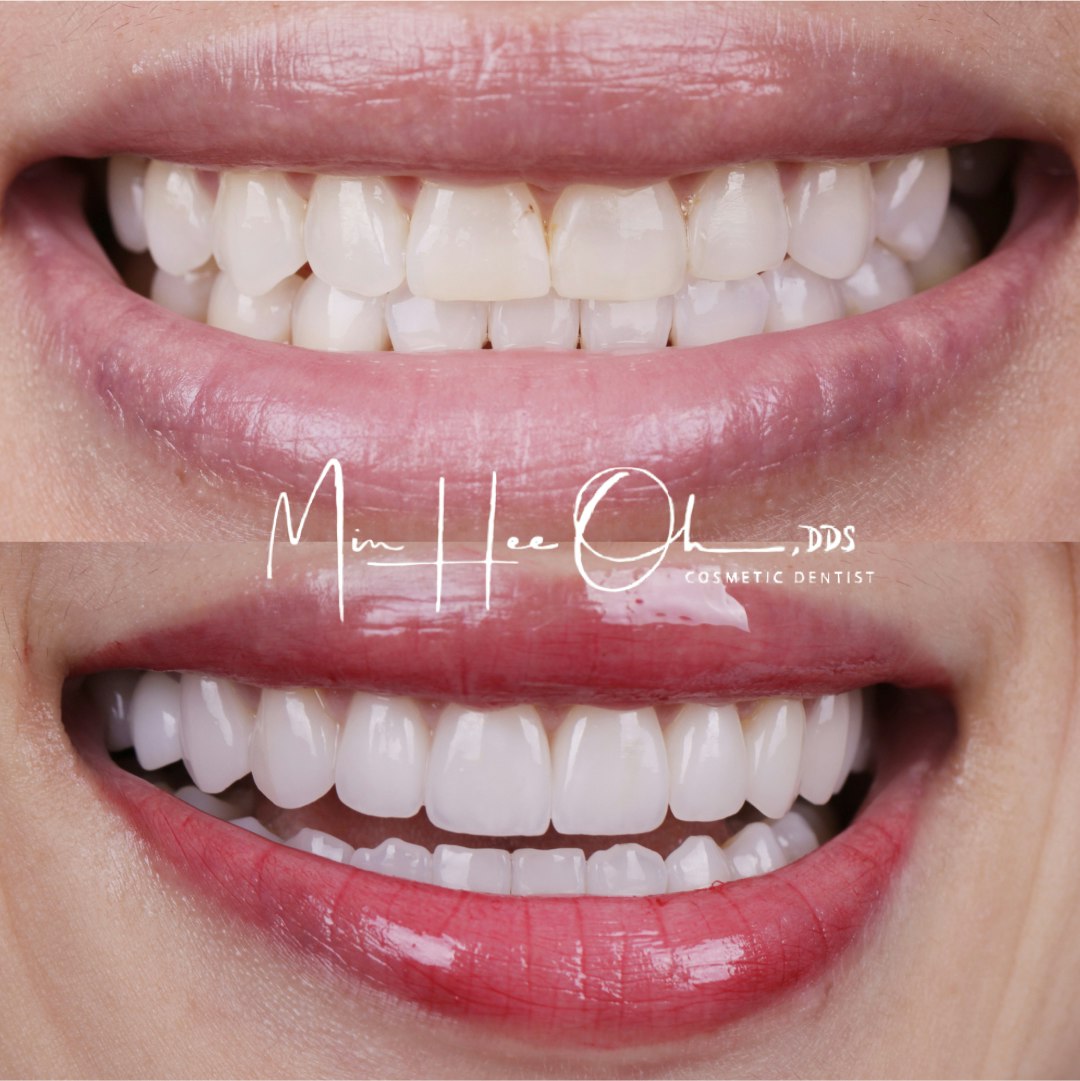
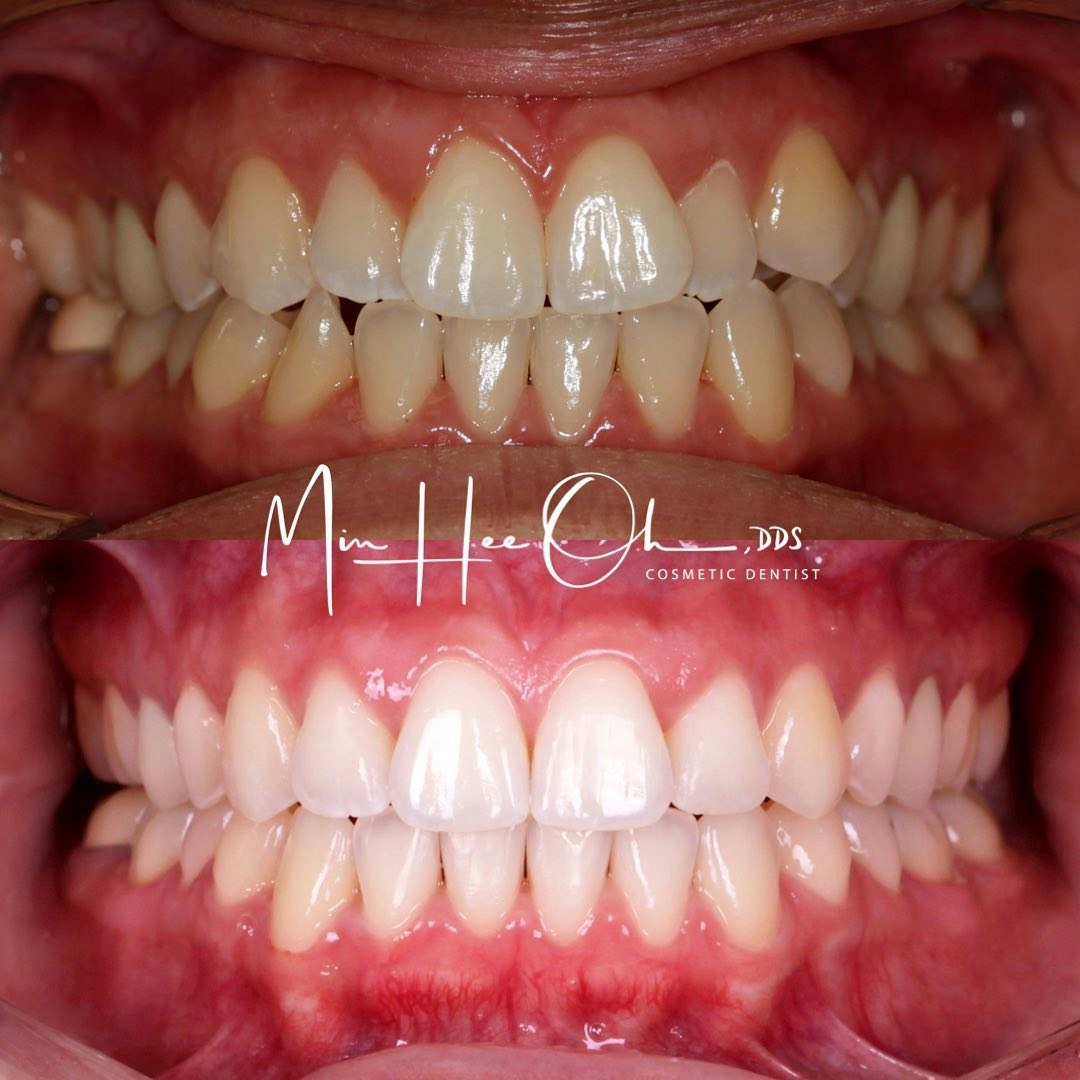
Invisalign moves your natural teeth; veneers reshape them. Aligners reposition healthy teeth into better alignment over months. Veneers are thin porcelain facings, bonded to the front of teeth, that change shade, shape, length, and proportion in a matter of weeks. One is orthodontic; the other is restorative artistry.
Side by side: a quick comparison
| Invisalign® | Porcelain veneers | |
|---|---|---|
| Best for | Crowding, gaps, bite issues on healthy teeth | Color, shape, proportion, worn or chipped edges |
| Timeline | 6–18 months, checked periodically | 2–3 visits over a few weeks |
| Tooth structure | Fully preserved — nothing removed | Minimal to no preparation, case-dependent |
| Changes color? | No — pair with whitening if desired | Yes — shade is fully customizable |
| Maintenance | Retainers after treatment | Night guard if you grind; routine hygiene |
When Invisalign is the right first move
If your teeth are fundamentally healthy — good shape, decent color, no major wear — but they sit in the wrong places, aligners are usually the answer. Crowding, small gaps, a slightly rotated tooth that catches the light wrong: these are position problems, and moving your own teeth is the most conservative correction that exists. Nothing is removed, nothing is added.
As a Platinum Invisalign provider since 2012, Dr. Oh plans aligner cases around facial balance — the smile's relationship to your lips and profile — not just straightness on a scan.
When veneers are the better answer
Alignment cannot change what a tooth is. If your concerns include deep discoloration that whitening cannot lift, short or worn edges, chips, uneven sizes, or a narrow smile that shows dark corridors — those are shape and surface problems. Porcelain veneers address all of them at once, with a result you can preview before committing.
Veneers are also the realistic choice when time matters. A wedding or a career milestone months away does not leave room for a year of aligners — veneers complete in a few weeks.
I never ask "which treatment do you want?" I ask "what do you want your smile to look like?" — then we choose the most conservative path that gets there. Dr. Min Hee Oh
The combination most people don’t consider
Here is the part that surprises many patients: the best smile makeovers often use both, in sequence. A short Invisalign phase first puts each tooth in its ideal position. Veneers placed on well-aligned teeth can then be dramatically thinner — sometimes no-prep — because the porcelain no longer has to disguise a position problem. Less preparation means more of your natural enamel preserved, a stronger bond, and a result that ages better.
This staged approach is the heart of our smile makeover planning: digital previews first, so you see the destination before we begin, then the most conservative route to reach it.
So — which one is right for you?
A useful self-check: if you could keep your teeth exactly as they are but rearrange them, would you be happy? If yes, start with Invisalign. If the teeth themselves — their color, shape, or wear — are the concern, veneers belong in the conversation. And if it is both, the sequenced combination usually wins.
The honest answer, though, only comes from an exam. Bite mechanics, gum health, enamel thickness, and your timeline all shape the recommendation — which is why every plan at our studio begins with a conversation, not a template.