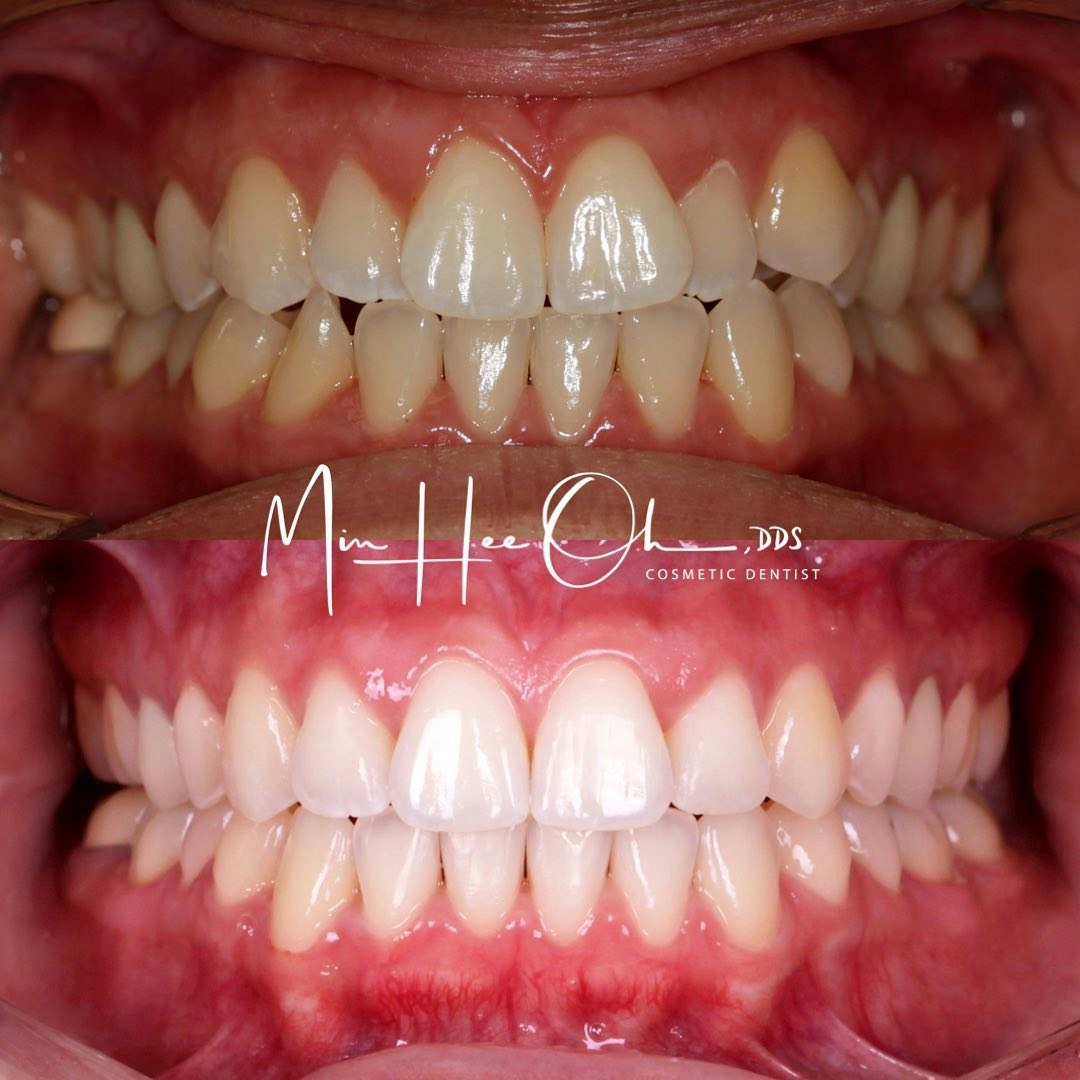

The short answer: your teeth may look more crooked in photos because the camera changes perspective and freezes a split second of your smile. A close phone lens, a slight head turn, uneven lighting, and natural lip movement can make one tooth look larger, more rotated, or farther forward than it appears in the mirror.
That does not mean the photo is “fake,” or that the mirror is hiding a serious problem. They are simply different representations of a three-dimensional, moving face. The useful question is not which image is perfectly true, but whether a consistent alignment or bite concern is present across real life, standardized photographs, and a dental examination.
1. A selfie changes perspective
When a phone is held close, the camera records each feature from a slightly different distance. Whatever is nearest the lens appears relatively larger; whatever is farther away appears smaller. If your phone is a little to one side, the front tooth closest to it may look wider or more prominent while the other side seems to recede.
Wide-angle smartphone lenses can make this more noticeable at arm’s length. Moving the camera farther away and using modest optical zoom usually produces a flatter, more balanced perspective. It may look less dramatic because the distance between the camera and each side of your smile becomes more similar.
We never design a smile from one selfie. We look at how the teeth, lips, and face relate from several angles — and how the smile moves in person.Dr. Min Hee Oh
2. Your mirror image is familiar and reversed
You see your mirror image every day, so that left-to-right reversal feels normal. Most photos show the non-reversed view that everyone else sees. Even when the difference is subtle, your own face can feel unexpectedly uneven simply because the orientation is unfamiliar.
In the mirror, you also make tiny adjustments without noticing: lifting your chin, centering your head, relaxing your lips, or changing the intensity of your smile. A photograph removes that motion and asks one fraction of a second to represent the whole expression.
3. Light and angle change the visual edges
Teeth are curved, translucent surfaces. Side lighting creates highlights on one tooth and shadows between others. Those shadows can make an overlap or rotation look deeper. A camera held below the mouth can emphasize the lower edges of the front teeth; a camera held above can change how much tooth and gum show.
Lip position matters too. One side of the upper lip may rise a little sooner or higher during a spontaneous smile. That can expose more of one side of the teeth and create the impression that the dental midline or smile line is tilted.
What may be changing in the photo?
| What you notice | A possible reason | A useful check |
|---|---|---|
| One front tooth looks larger | Phone is close or off-center | Step back and use modest optical zoom |
| Smile looks tilted | Head angle or uneven lip movement | Keep the camera level and face straight ahead |
| Overlap looks darker | Side lighting creates a deeper shadow | Try soft, even light facing a window |
| Midline looks off | Camera angle, head turn, or a true dental/facial difference | Compare several straight-on images, not one selfie |
| Concern appears in every view | Actual tooth position, proportion, or bite may contribute | Ask for a comprehensive smile and bite evaluation |
A more standardized photo can reduce camera effects, but it still cannot diagnose your bite, gum health, enamel, or the three-dimensional position of each tooth.
4. Small asymmetries are part of a natural smile
Perfect bilateral symmetry is unusual. One side of the face may be slightly fuller, one lip corner may move differently, and neighboring teeth may not be mirror copies. Research on smile perception also suggests that people often tolerate minor asymmetry more than we expect.
Aesthetic dentistry is not about erasing every individual detail. The goal is harmony: tooth position and proportion should support the lips, facial midline, smile arc, and your own character. Sometimes the most appropriate recommendation is reassurance and no treatment at all.
Try a more honest photo check
- Clean the lens. Haze and sharpening artifacts can blur edges or deepen contrast.
- Use the rear camera if practical. Place it near eye level and avoid an ultra-wide setting.
- Step back. Ask someone to take the photo from several feet away and use a small amount of optical zoom rather than holding the phone inches from your face.
- Face soft, even light. Keep the head upright and take both a relaxed and a full smile.
- Compare a short video. Movement often shows the overall harmony of a smile better than one frozen frame.
If the concern disappears when distance, angle, and lighting improve, the camera was probably contributing. If it remains across views and bothers you, a clinical assessment can separate tooth alignment from lip movement, tooth shape, and facial balance.
If something truly feels off, what can help?
- Invisalign® or another orthodontic approach moves natural teeth and may address crowding, rotations, spacing, or selected bite concerns. It is the more direct path when position is the main issue.
- Porcelain veneers can refine visible shape, proportion, color, and apparent alignment. They do not move teeth or correct a bite, and they require careful consideration because treatment changes the tooth surface.
- A smile makeover is not one procedure. It is a coordinated plan that may include whitening, contouring, bonding, orthodontics, veneers, or no restorative work at all.
The least invasive predictable option should come first. For some people that is orthodontic movement; for others it is a small shape refinement. For many, the right answer is understanding that a close selfie has made a normal variation look more important than it is.
When to schedule an evaluation
Consider a dental visit if you notice a new change in tooth position, your bite feels different, a tooth is mobile or painful, you have jaw discomfort, or the concern is consistent and affects your confidence. An examination can evaluate the teeth and gums, bite, midlines, facial proportions, and smile in motion before any cosmetic option is discussed.
The honest bottom line
A mirror, a selfie, and a professional portrait can make the same smile look surprisingly different. Close camera distance and angle can amplify small asymmetries, while familiarity makes the mirror feel more “right.” Do not let one unflattering frame make a treatment decision for you. Look for a consistent pattern, then choose care only if there is a real concern and the benefit is meaningful to you.